
Cory Doctorow on Aaron Swartz

Written by Cory Doctorow
On January 11, a young hacker, hacktivist and entrepreneur named Aaron Swartz took his own life. He was 26, and I had known him since he was 14. He was facing 50 years in prison. His crime was to walk into an unsecured computer closet at MIT, near the Harvard campus where he had a fellowship, and plug a laptop into the campus network, with which he proceeded to download a large amount of paywalled academic journal articles from JSTOR, an online repository of scholarly works. It is widely speculated that he planned on making these available for free, though it may be that no one will ever know what he really intended.
Here’s what we do know: Aaron didn’t care about the freedom of information. Aaron cared about the freedom of *people* to make use of information. When I met Aaron, he was already someone extraordinary, a 14 year old programmer who’d made key contributions to the RSS 1.0 standard, part of the foundational infrastructure of the Internet, designed to facilitate the sharing of information between different sites. He went on to be part of the founding team of Creative Commons, then went on to help create a website called Reddit, which is now one of the most rollicking, thriving communities on the Internet.
Aaron used his Reddit money to become a full-time, full-tilt, reckless and wonderful shit-disturber. Offended that the US government was charging for access to public domain case-law, Aaron paid to download 20% of US law, and then put it in the public domain. This earned him his very own FBI file and the everlasting enmity of the DoJ, who were frustrated that this punk kid had had the gall to give the public free access to its own laws, and had gotten away with it.
The DoJ threw the book at Aaron over the MIT stunt, even though JSTOR publicly disavowed any further prosecution of Aaron (MIT was more lukewarm on the subject, which gave the DoJ the excuse it needed to press on). They asked the court for a 50 year sentence for “computer crimes.” Even if he won, Aaron was looking at well over $1,000,000 in legal fees.
Aaron hanged himself two years, to the day, after his arrest. Make of that what you will.
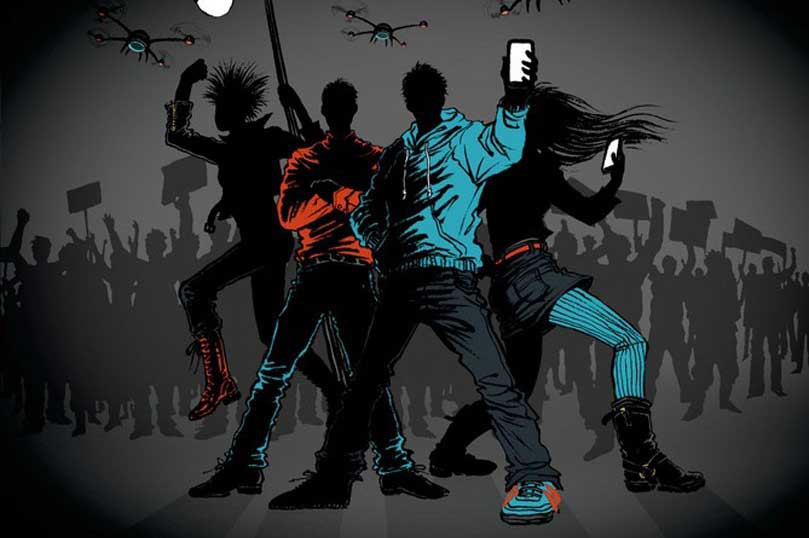
I have often been asked whether M1k3y, the adolescent hero of Little Brother and Homeland, is a version of me. He’s not, I always say, because I was never as cool as that. I don’t think Aaron was “cool” in the way M1k3y aspires to be, but the two of them share a passionate, visceral response to injustice; they share a preternatural technical ability; and they share a charm and humor that makes the people around them want to follow them and listen to them.
Aaron read an early draft of Little Brother and called it, “The most subversive piece of fiction I can think of. I imagine armies of kids out there nuking frozen grapes.” When I started work on Homeland, the sequel to Little Brother, I knew I wanted it to turn on a next-generation political campaign. Aaron’s activist group, Demand Progress, had been at the vanguard of the fight against SOPA and PIPA (the sure-thing, oppressive Internet/copyright bills that collapsed in the face of absolutely unprecedented public protest). I knew he’d have good ideas.
He did. I sent him an email about it at 5:57AM on the morning of Dec 22, 2011. Aaron answered with a full-fledged, brilliant high-tech political campaigning strategy at 8:23AM. It was so good I basically just pasted it straight into the book, except for the last line: “i could go on, but i should actually take a break and do some of this.”
Aaron wrote one of the two afterwords to Homeland. I asked him what he would say to his own 14-year-old self, what advice he’d give. He wrote an outstanding call to arms, which includes lines like:
“I know it’s easy to feel like you’re powerless, like there’s nothing you can do to slow down or stop ‘the system.’ Like all the calls are made by shadowy and powerful forces far outside your control I feel that way, too, sometimes. But it just isn’t true.”
and
“The system is changing. Thanks to the Internet, everyday people can learn about and organize around an issue even if the system is determined to ignore it. Now, maybe we won’t win every time—this is real life, after all—but we finally have a chance.
“But it only works if you take part. And now that you’ve read this book and learned how to do it, you’re perfectly suited to make it happen again. That’s right: now it’s up to you to change the system.
“Let me know if I can help.”
Aaron signed it with his email address. He wanted the world to get in touch with him. He can’t answer their emails anymore, but he can still help. Aaron may have been hounded into a premature grave half a century before he should have gone, but he left behind a legacy and a consciousness of what can change, and how it can change.
The DoJ will never win their case against Aaron, now. And if we remember Aaron’s passion and conviction that wrongs must be righted; that information doesn’t want to be free, but people surely do; he will win forevermore.
Goodbye, Aaron. We miss you.
…………………………
From the Tor/Forge February newsletter. Sign up to receive our newsletter via email.
…………………………
More from the February Tor/Forge newsletter:
- An Interview with Lady Trent, Dragon Naturalist by Marie Brennan
- Speechless: Writing Dialogue for Characters Who Don’t Speak by Evie Manieri
- Grab Bag Sweepstakes